For more manuscripts and manuscript studies, join the Genizah Guild
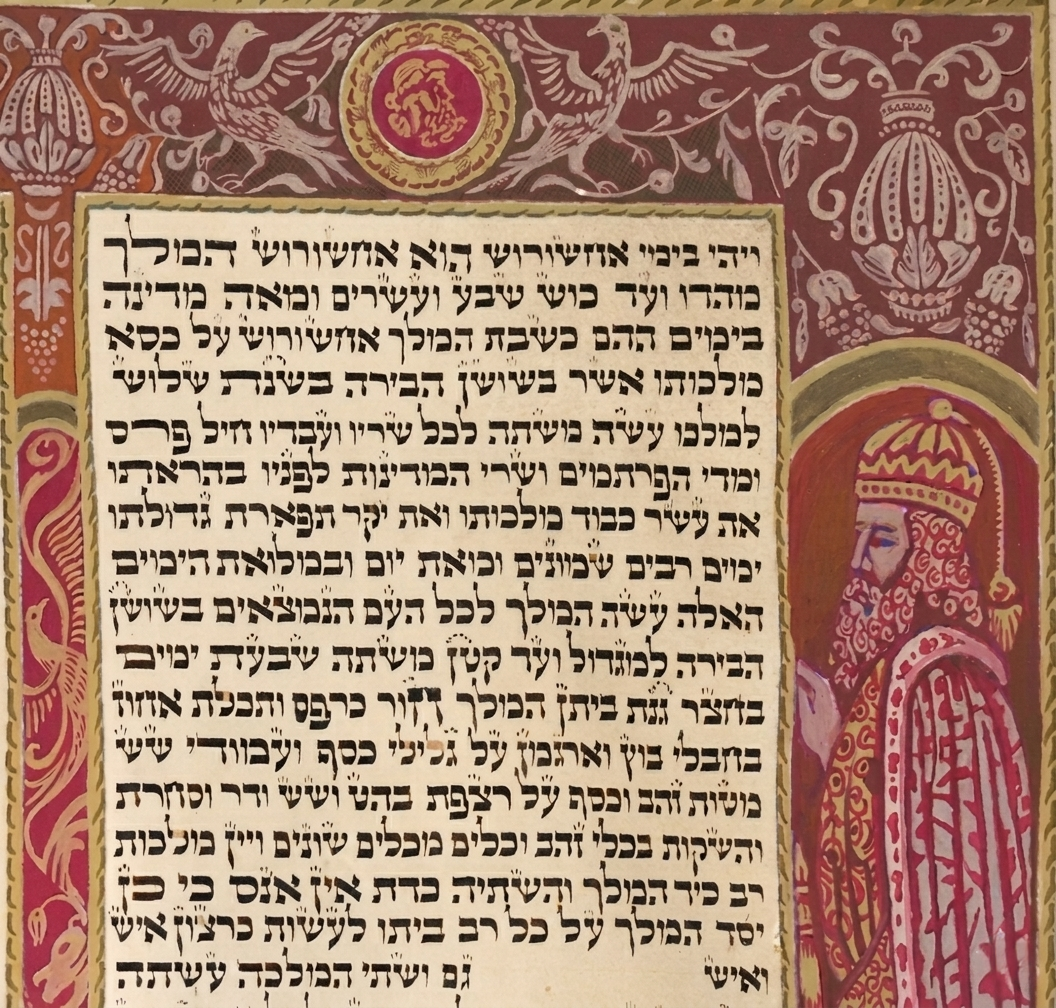
Textual Markers in Parashah 1
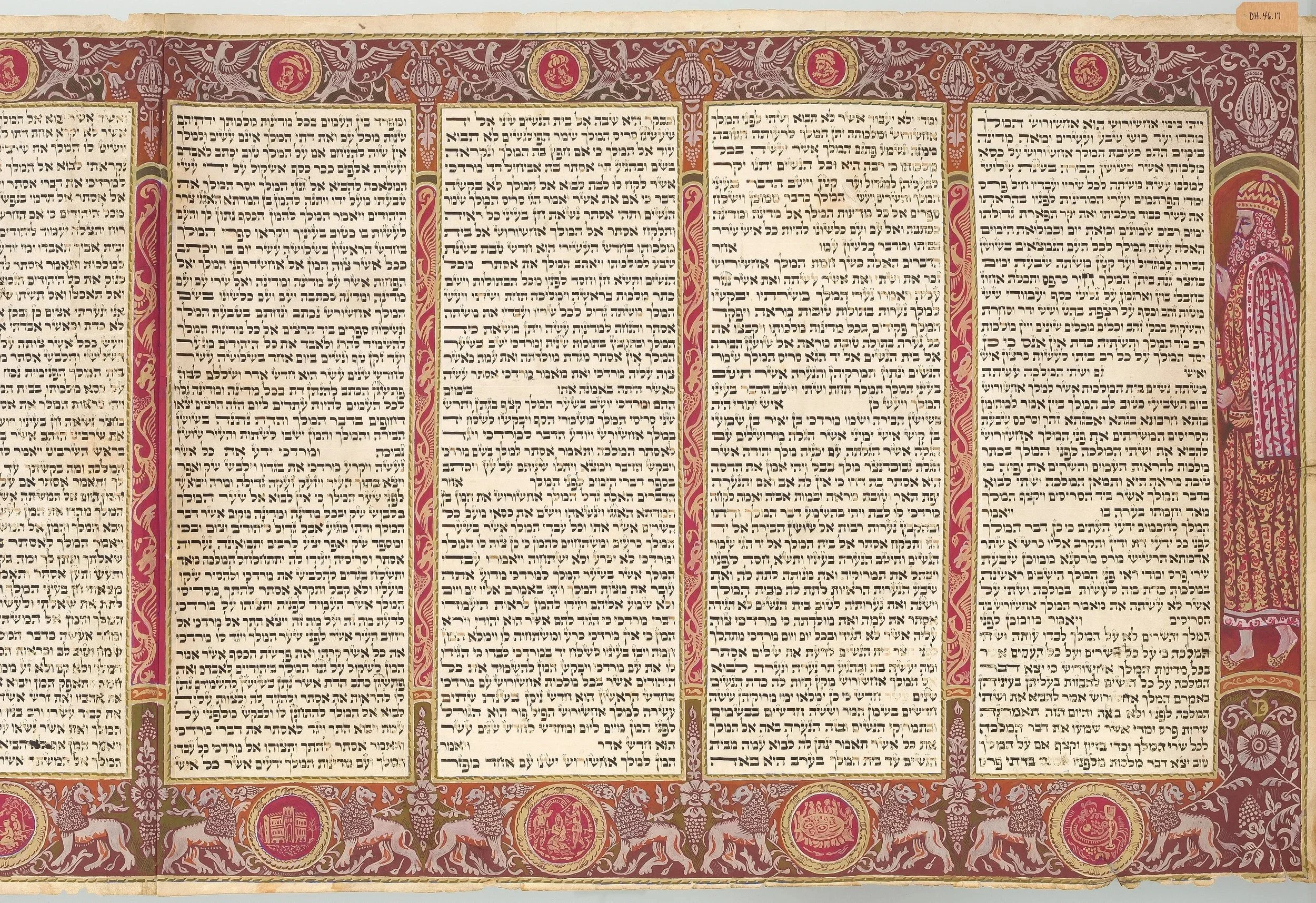
In paleographical analysis, the category “textual markers” refers to observable features within the text of a scroll or manuscript that can be used to pinpoint influences in production connected to the time, place, and community of origin. Often these are geographically distinct and reflect thinking current in the respective communities and/or the scribe(s) involved. These markers can also provide information about the conditions under which the manuscript was produced, the relative skill level of those involved in its manufacture, as well as the number of the writer(s). Megillot (scrolls) of the book of Esther have distinct and unique features specific only to Esther that may be analyzed and catalogued for paleographical insight.
These include both ’otiyyot rabbati (large letters) and ’otiyyot zeirot (small letters). (1) In scrolls produced in the era of the present scroll, for Ashkenazi scripts of the Beit Yosef style, it is typical for the letter ח to be formed as the composite of two letters zayin serving as the legs of the letter and then connected with a pitched roof. (2) There are three “large letters” that occur in all scrolls of Estjher. The first of these in in 1:6 and is the initial majuscule ח in the word חוּר, easily identifiable by its significantly enlarged size.
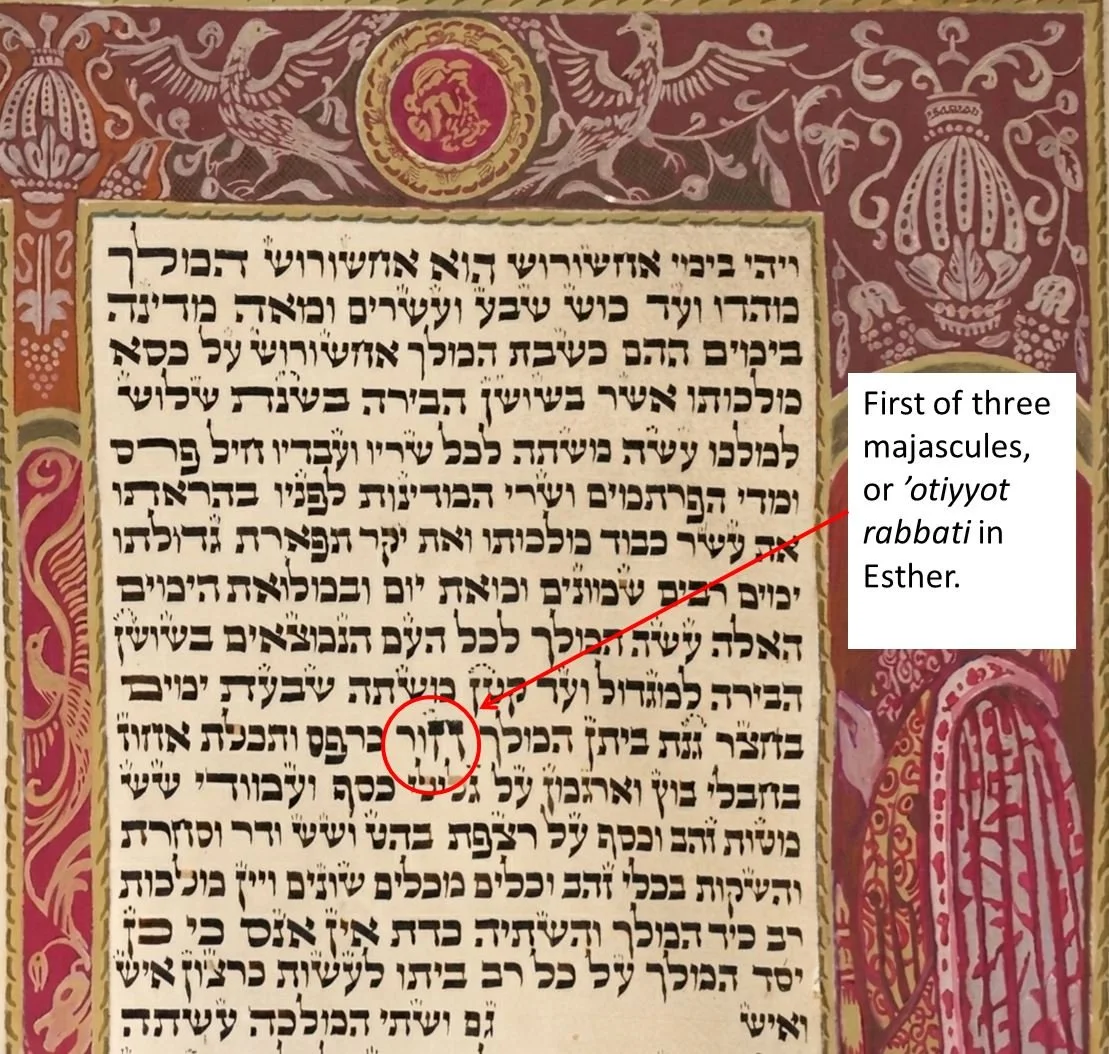
MEGILLAT ESTHER
Parashah 1 (verses 1:1-8); Sample features
Textual Features:
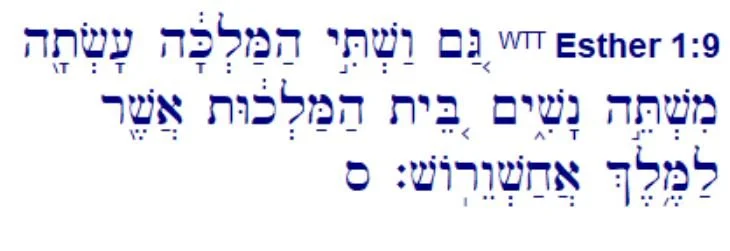
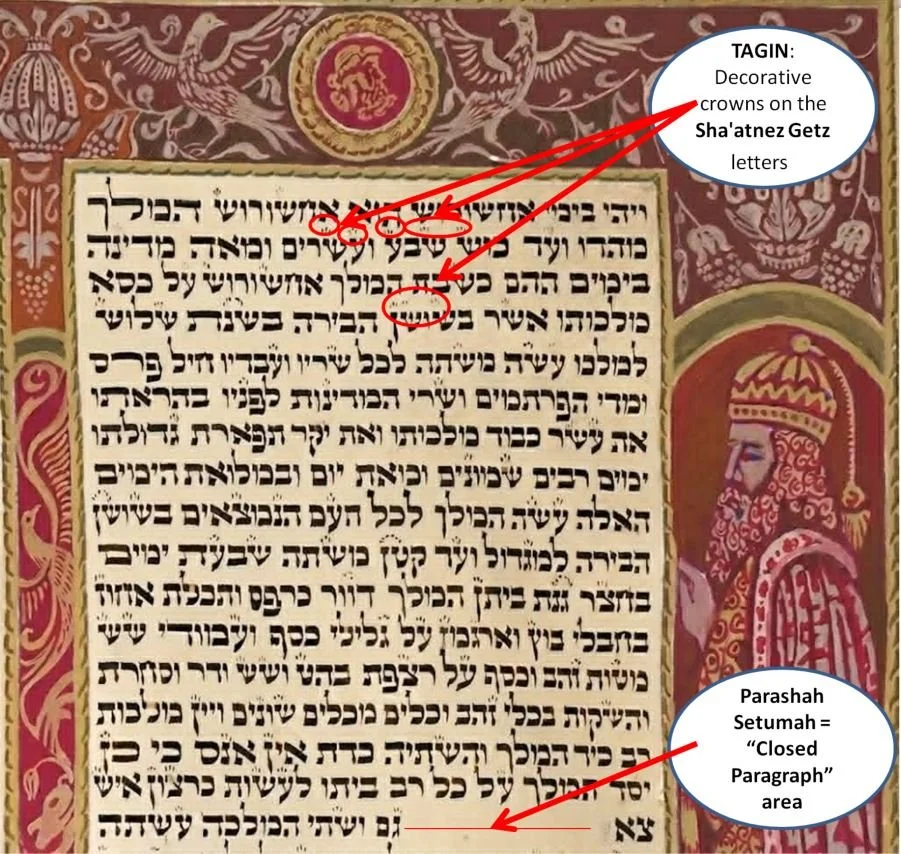
Parashah 1 (paragraph 1) is the opening paragraph and begins with verse 1 and runs through verse 8 followed by the blank space before the start of verse 9 as illustrated (right).
The Herzog Tanakh, for example, represents this placement whereas modern printed editions like the BHS place the paragraph break after verse 9 as shown in the graphic above.
Tagin - Tagin are “crowns” that appear on specific Hebrew words known by the mnemonic device "Sha'atnez Getz." These letters are: Shin (ש), Ayin (ע), Tet (ט), Nun (נ), Zayin (ז), Gimmel (ג), and Tsadi (צ).
Parashah Setumah - This is a gap in the middle of a line indicating a “closed paragraph,” meaning that it is closed or “boxed” by preceding and following words. It is indicated in modern printed editions by an enlarged letter “ס.”
Megillah - is the Hebrew word for “scroll.” Since the word is grammatically feminine, when in construct with the absolute word, “Esther,” it takes the feminine construct form of “megillat,” meaning, “scroll of ….”
Outline (1:1-8)
I. The Political Context (Verses 1–2)
The Reign of Ahasuerus: Identification of the King as the one ruling from India (Hodu) to Ethiopia (Cush).
The Scope: 127 provinces, establishing his absolute power.
The Seat of Power: The King is "settled" on his throne in the fortress of Shushan.